


Adelaide Zoo

Immersion - South East Asian Rainforest (SEAR)

Awards

2007 AILA South Australia Merit Award for Design in Landscape Architecture

Central Hub

Immersion central hub

2152

Immersion

The Adelaide Zoo Master Plan was completed in 1990 and focuses on the Zoo's primary objectives of education, conservation, tourism/recreation, research and animal management. From this master plan, the South East Asian Rainforest (SEAR) Exhibit was planned to house animal species from that region and provide visitors with face-to-face encounters with the animals in their natural environment.

SEAR Stage 1 was completed in 1995 with exhibits Siamang, Dusky Langurs, Malayan Tapir, Sunbears, Otters and various bird species. SEAR Stage 1 pushed the benchmark for ‘habitat mixed exhibits’ highlighted by the Malayan Tapir, otter and Langurs living in and around the gigantic Morton Bay Fig tree without any obvious physical barriers.

By removing the barriers', SEAR shifts from the traditional exhibit design into the world of immersion.

Tiger

2111

Sumatran Tiger Exhibit

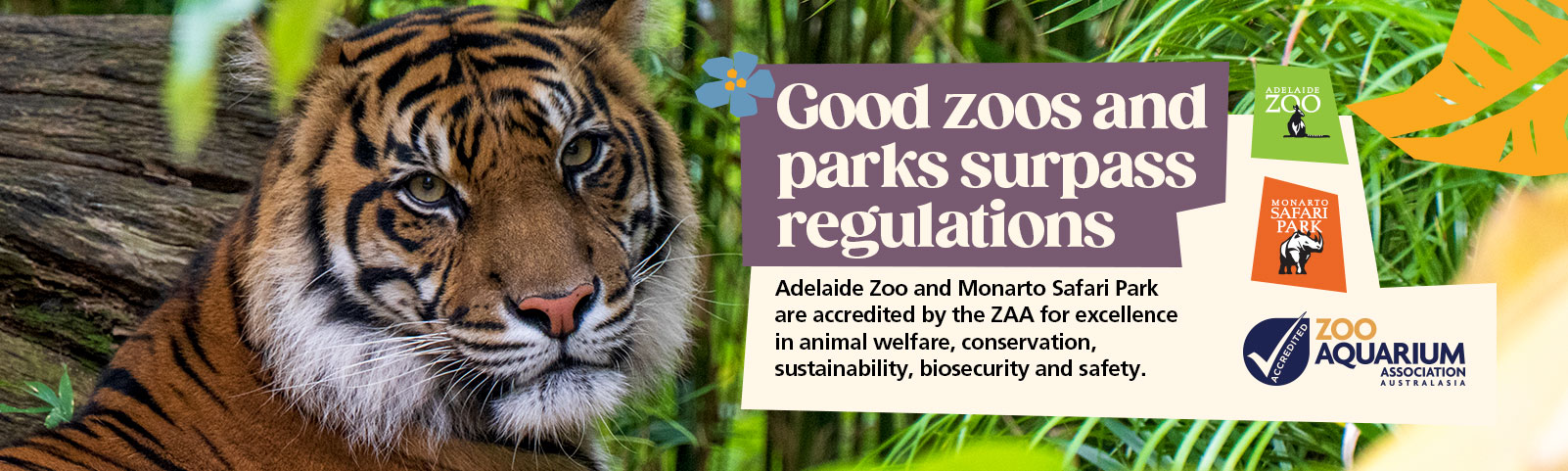
The Sumatran Tiger Exhibit is located opposite the existing Sun Bear exhibit. The exhibit is themed as a lowland rainforest, with a clearing to the front. Main features include a small water body, raised ground level for eye-to-eye viewing and felled tree limbs within the rainforest vegetation. The critically endangered Sumatran Tiger will be housed here.

Enrichment devices within the exhibit provides for tiger exercise and encourage them to spend the majority of their time at the front of the adjacent the visitor-viewing platform. The grading and slopes enhance the environment and bring the animal to the same height as the visitor.

Tiger Exhibit

Underwater viewing at the Sumatran Tiger Exhibit

2134

Sumatran Tiger underwater viewing area

3380

Underwater Viewing

The  underwater viewing area is located adjacent the Hub.  Visitors will have access to views overlooking the entire exhibit to reveal the large expanse of lowland rainforest, leading into riverside vegetation and the clearing adjacent the lower water body. The primary view of the exhibit will be from the central hub and the Pavilion.

The exhibit comprises of a large wet moat, split into two water bodies at different heights. At the east end of the moat, a large rock outcrop rises from the water creating a waterfall cascading from above. The tiger may enter both water bodies and a hot rock in the upper pool will provide an ideal resting spot.

The rock outcrop will house a bungee cord feeder as an enrichment feature and encourage the tiger to the front of the exhibit.

Located in the centre of the exhibit is the 'O-Line' tower, which enables access by Sumatran Orangutans high up into the canopy. The design of the tower prevents tigers from climbing up and orangs from climbing down.

Orang-utan enclosure

4843

Orangutan and O-Line

The Orangutan exhibit is bounded by Tiger exhibit, the holding building and the service road and is primarily viewed from the Hub. Views into the Orangutan exhibit are located to provide a variety of experiences for the visitor. Themed as a lowland rainforest cleared of vegetation for logging, the landscape accommodates the arboreal nature of the Orangutans.

The main feature of the exhibit is the 'O-Line'. Two tall climbing structures made from felled trees are positioned high into the air above the exhibit and house platforms to simulate the natural environment. Ropes link the platforms, replicating vines, allowing the primates to move between them.

The third platform is located in the Tiger exhibit, permitting the Orangs to travel into the tiger exhibit, but preventing them from climbing down the tower. Likewise, the tigers are prevented from climbing up the tower. This is a unique and exciting opportunity for you to view the two species as they would behave in the wild.

From the Hub, the you can view the Orang within a metre through a glass-viewing window in the ‘Sumatran Pavilion’.

Plants

A list of flora was selected for Immersion that closely represent the natural vegetation and habitats of this unique region, largely due to their origins from the regions of South East Asia and Tropical Northern Australia. The plantings were also chosen due to their adaptabilities to Adelaide's climatic conditions as well as tying together with the first stage of the Zoos South East Asian precinct.

 Immersion plants

Time Capsule

A time capsule was placed near Immersion, with the contents representing a snapshot of our zoo, our people and the amazing animals of which were the custodians on 22 November 2005.

The contents, which were compiled by Adelaide Zoo staff, were cryovacted to help preserve them before being stored in an airtight container. This container was then wrapped in additional damp proofing plastic and buried at the entrance to Immersion. A large boulder has been placed on top, with a plaque to commemorate the site.

There’s no doubt the contents will prove an interesting read in a hundred years time!

Items enclosed in time capsule:

  • Copy of the Adelaide Zoo’s Master Plan and revised edition<
  • Annual reports for 2003/2004 and 2004/2005
  • All 2005 editions of our Zoo Times magazine
  • Adelaide Zoo staff photo
  • Current list of fauna collection
  • Botanical guide to the Adelaide Zoo
  • Zoo maps x 2 (one prior to Immersion, the other including Immersion)
  • Adelaide Zoo booklet and coin
  • Leaflets on Immersion, Future Zoo Foundation, membership and animal adoption
  • Information on education programs, Zoosnooze and ZOOmobile
  • A photo of the macaw free flight presentation
  • Paintings by “Pusung”, our male orangutan, and accompanying newspaper article
  • Old and new Zoo Shop signage
  • A membership badge

Website by Bridgehead ... Powered by WebTemplate