Adelaide Zoo
Bird flu and what it means for your visit: Learn about the precautionary measures we're taking and what to expect during your visit.

Introduction

Welcome to Beaking the Binary, an exploration of the incredible diversity of sex, reproduction and social behaviours found across the animal kingdom.

From same-sex pair bonds and female-led societies to asexual reproduction and animals that naturally change sex, nature is filled with behaviours that challenge our understanding of what’s considered the norm.

Grounded in scientific research, Beaking the Binary explores animals at Adelaide Zoo alongside
fascinating examples from species around the world.

Follow the trail, listen along or explore online as we uncover the surprising ways animals reproduce, form bonds, navigate their social worlds, and discover just how diverse nature really is.

Download the PDF trail map


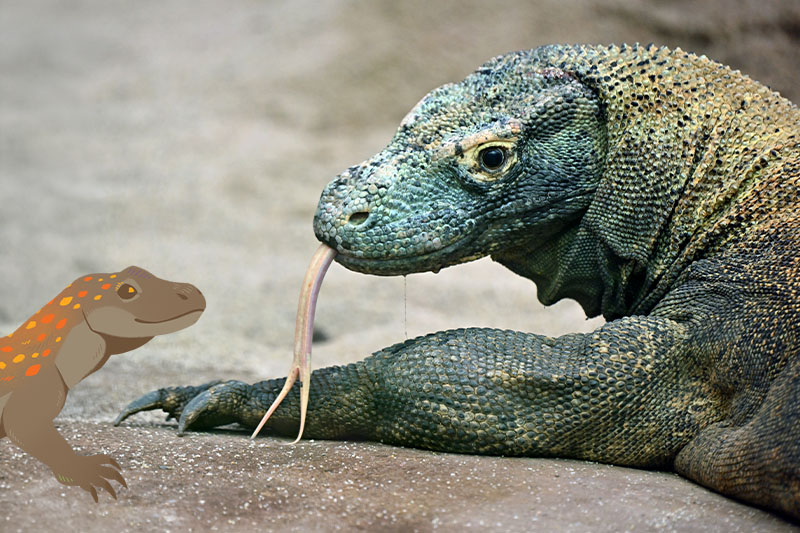
Komodo Dragons (D14)

Komodo Dragons are famous for their reputation as the world’s largest living lizard, but they also possess one of the most surprising reproductive abilities in the animal kingdom.

While Komodo Dragons normally reproduce sexually, females can also produce offspring without mating through a process called parthenogenesis. In simple terms, a female can create fertile eggs entirely on her own. This incredible ability shocked scientists when it was first confirmed in zoos and revealed just how flexible reproduction in nature can be.

Their story becomes even more fascinating when compared to their distant cousin the Whiptail Lizard, where entire all-female populations still display mating and courtship behaviours despite males not existing at all.

Komodo Dragons (Varanus komodoensis) became internationally significant in reproductive biology after scientists confirmed cases of parthenogenesis in captive females during 2006 [1]. Parthenogenesis is a form of asexual reproduction where embryos develop from unfertilised eggs, meaning no male is required for reproduction. Although this process exists in several reptile species, it was considered highly unusual in large predatory vertebrates like Komodo Dragons.

The discovery occurred when isolated female dragons in zoos successfully laid viable eggs despite having no contact with males [1]. Genetic testing confirmed the offspring carried only maternal DNA. Because Komodo Dragons use a ZW chromosome system, parthenogenesis produces viable ZZ male offspring, while WW embryos do not survive [2]. Scientists believe this ability may provide an evolutionary advantage in isolated environments where mates are difficult to find, potentially allowing a lone female to establish a future breeding population [3]. Parthenogenesis provides an alternative when a mate isn’t available, rather than replacing the important role of males in maintaining genetic diversity and healthy populations.

This differs from the Whiptail Lizard, a separate lineage of reptiles that has taken parthenogenesis even further. This species is made up entirely of females, yet they still engage in mating-like social behaviours known as pseudocopulation [4]. During these interactions, one female temporarily adopts a pseudo-male behavioural role, displaying mounting and courtship behaviours that resemble male mating patterns. Research has shown these interactions are linked to hormonal cycles, with the “pseudo-male” female experiencing elevated progesterone levels that influence behaviour [5]. These social interactions help stimulate ovulation and improve reproductive success in their partners, despite no fertilisation occurring.

Together, Komodo Dragons and Whiptail Lizards reveal that reproduction, sex-linked behaviours and social roles in nature are often far more fluid and adaptable than once believed. Rather than fitting rigid biological categories, reptiles demonstrate a spectrum of strategies shaped by survival, hormones, environment and social interaction.

[1] Watts, P. C. et al. (2006). Parthenogenesis in Komodo Dragons. Nature.
[2] University of Chester. “Komodo Dragon Virgin Birth Research.”
[3] Smithsonian National Zoo. “Komodo Dragon Reproduction and Parthenogenesis.”
[4] Neaves, W. B. & Baumann, P. (2011). Unisexual reproduction among vertebrates. Trends in Genetics.
[5] Crews, D. & Fitzgerald, K. T. (1980). “Sexual” behavior in parthenogenetic lizards. Proceedings of the National Academy of
Sciences.


Giraffes (H6)

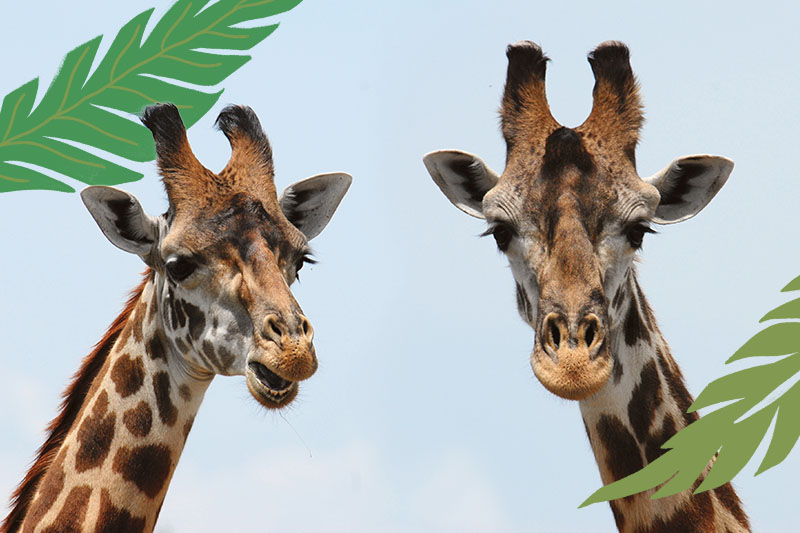
The towering trio of giraffes at Adelaide Zoo are all female, but male giraffes are actually known for some of the most commonly observed same-sex behaviour in the animal kingdom.

Young males naturally spend years living together in bachelor groups, forming strong social bonds through neck wrestling, grooming, rubbing and close physical affection. Researchers studying both wild and managed giraffe populations have documented frequent same-sex courtship and sexual behaviour between males, with one Tanzanian study finding that more than 90% of observed mounting behaviour occurred between two males.

Rather than being unusual, these interactions are considered a normal and important part of giraffe social life, helping establish hierarchy, strengthen relationships and build trust across the herd.

Giraffes (Giraffa camelopardalis) have become one of the most widely discussed examples of same-sex behaviour in mammals, thanks in part to the pioneering work of zoologist Anne Innis Dagg. During field studies in South Africa in the 1950s, Dagg became one of the first scientists to openly document samesex courtship and sexual behaviour in wild giraffes [1]. She observed males engaging in neck rubbing, licking, nuzzling, courtship-like circling and mounting behaviours, many of which appeared affiliative and social rather than aggressive. These interactions commonly occurred within bachelor groups, where males may spend years forming social bonds and establishing hierarchy before competing for females later in life.

One of the most repeated findings in giraffe behavioural research comes from a Tanzanian observational study involving more than 3,200 hours of field observation. Researchers found that 94% of documented mounting behaviour occurred between male giraffes [2]. Scientists caution this statistic refers specifically to observed mounting interactions rather than all giraffe sexual behaviour, as heterosexual mating events can be brief and harder to observe in the wild [3]. Even so, the study highlighted just how common same-sex interactions are within giraffe social systems.

Researchers now believe these behaviours may help strengthen social bonds, reduce tension, establish familiarity or practise reproductive behaviours [4]. Similar same-sex behaviours have been documented across hundreds of bird and mammal species, contributing to a growing scientific understanding that sexuality and social bonding in nature exist along a broad spectrum [5]. Giraffes continue to challenge the outdated idea that animal relationships are always rigidly heterosexual or solely focused on reproduction. Instead, they reveal a social world built on hierarchy, companionship, cooperation and connection.

[1] Dagg, A. I. (1958). The behaviour of the giraffe in the Eastern Transvaal. Behaviour, 12(1), 63–98.
[2] Bagemihl, B. (1999). Biological Exuberance: Animal Homosexuality and Natural Diversity. St Martin’s Press.
[3] Bailey, N. W. & Zuk, M. (2009). Same-sex sexual behaviour and evolution. Trends in Ecology & Evolution.
[4] Sommer, V. & Vasey, P. (2006). Homosexual Behaviour in Animals: An Evolutionary Perspective. Cambridge University Press.
[5] Roughgarden, J. (2004). Evolution’s Rainbow: Diversity, Gender, and Sexuality in Nature and People. University of California Press.


Ring-Tailed Lemurs (H4)

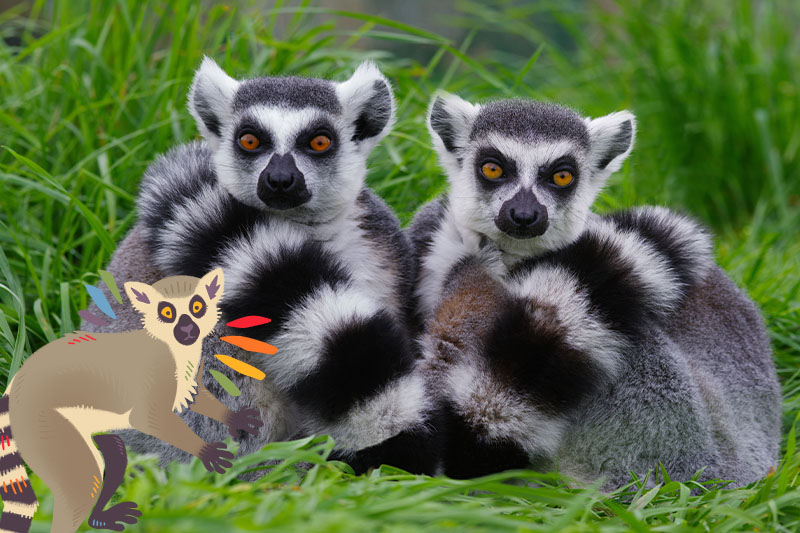
Ring-tailed Lemurs flip the script on what many scientists once considered the “standard” social structure in the animal kingdom.

In their world, females lead the troop, call the shots and hold much of the social power. Life is loud, deeply social and built on complex relationships shaped by teamwork, affection and trust.

Grooming circles, cuddle piles and same-sex bonding are all part of everyday lemur life, helping strengthen connections within the group. Ring-tailed Lemurs remind us that nature is filled with diverse ways of living, leading and forming relationships, far beyond the rigid categories humans have often expected to find in the wild.

Ring-tailed Lemurs (Lemur catta) provide a valuable example of the diversity that exists within animal social systems. Native to Madagascar, these primates live in highly social troops structured around female dominance [1]. Females are typically responsible for leading group movement, maintaining priority access to food and directing many social interactions within the troop. This matriarchal structure challenges long-standing assumptions that male dominance is the default across animal societies [2].

Social bonding plays a central role in lemur life. Ring-tailed Lemurs rely heavily on grooming, physical contact and close affiliative relationships to maintain troop cohesion and reduce conflict [3]. These bonds are not limited to reproductive pairings. Researchers have documented same-sex mounting, courtship-like interactions and long-term same-sex social bonds among both males and females [4]. In behavioural science, these interactions are understood as part of broader systems of communication, alliance building and social regulation, rather than behaviours existing solely for reproduction.

The species also demonstrates that social roles are flexible rather than rigidly determined by sex. While females hold social authority, troop survival depends on cooperation between all members, including males and non-breeding individuals. Care, protection and group stability are shared responsibilities shaped by social relationships and environmental pressures.

Ring-tailed Lemurs demonstrate that leadership, affection and social bonding do not always follow the patterns humans have historically considered “normal”. Their behaviour offers an opportunity to reflect on the diversity already present throughout the natural world and the limitations of viewing biology through rigid binary frameworks. Keen to learn more about these fascinating primates? Head to Monarto Safari Park for the Land of the Lemurs experience.*

[1] Jolly, A 1966, Lemur Behavior: A Madagascar Field Study, University of Chicago Press.
[2] Cooke, L 2022, Bitch: A Revolutionary Guide to Sex, Evolution and the Female Animal, Doubleday, London.
[3] Sauther, ML, Gould, L & Cuozzo, FP 2003, ‘Why are ring-tailed lemurs female dominant?’, Evolutionary Anthropology.
[4] Vasey, PL 2002, ‘Same-sex sexual partner preference in hormonally and neurologically unmanipulated animals’, Annual Review
of Sex Research.

*Only available during Spring and Autumn months


Dasyurid Marsupials (K2)

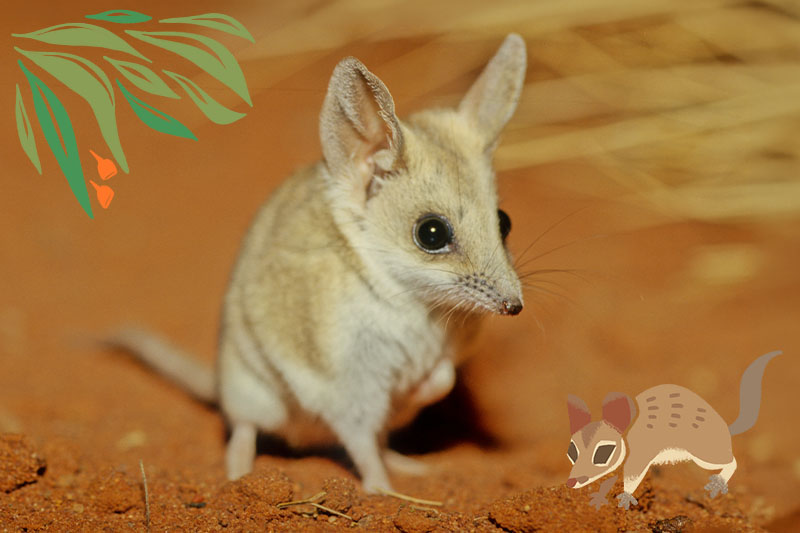
Inside the Nocturnal House, you’ll find many of Australia’s most fascinating small predators, including the tiny Fat-tailed Dunnart, but these animals are remarkable for more than just their speed and survival skills. In some dasyurid species, scientists have discovered rare cases of intersexuality, where an animal naturally develops a mix of both male and female biological traits.

This can include differences in chromosomes, reproductive organs or physical characteristics that do not fit neatly into one category. Discoveries like this help show that biological sex in nature is not always as simple or strictly binary as humans once believed, even among mammals.

Mosaic intersexuality occurs when an individual develops a mixture of male and female biological characteristics across different tissues of the body. In documented dasyurid cases, researchers observed combinations of male and female reproductive tissues, mixed chromosomal cell populations and variations in gonadal development [1]. These conditions are thought to arise very early during embryonic development, when chromosomal differences emerge between groups of cells within the same individual [2].

Research into marsupial sex development has become particularly important because mammals are often mistakenly viewed as having strictly binary biological sex systems. Studies involving dasyurids and other marsupials demonstrate that sex differentiation is influenced by a complex interaction of chromosomes, hormones, gene expression and developmental pathways, which do not always align in simple male-or-female patterns [3][4]. Scientists increasingly recognise that intersex variation occurs naturally across many vertebrate groups, including mammals, birds, reptiles and fish.

Dasyurid marsupials provide a valuable scientific example that biological diversity exists throughout nature. For many intersex and queer people, these discoveries can hold particular significance because they challenge the misconception that variations in sex development are unnatural or uniquely human. Instead, these remarkable Australian marsupials reveal that complexity and diversity are natural parts of life itself.

[1] Cooper, D. W., et al. (1992). Mosaic intersexuality in marsupials. Australian Journal of Zoology.
[2] Renfree, M. B. & Short, R. V. (1988). Sex determination in marsupials. Journal of Experimental Zoology.
[3] Graves, J. A. M. (2006). Sex chromosome specialization and degeneration in mammals. Cell.
[4] Ainsworth, C. (2015). Sex redefined. Nature.


Koalas (I8)

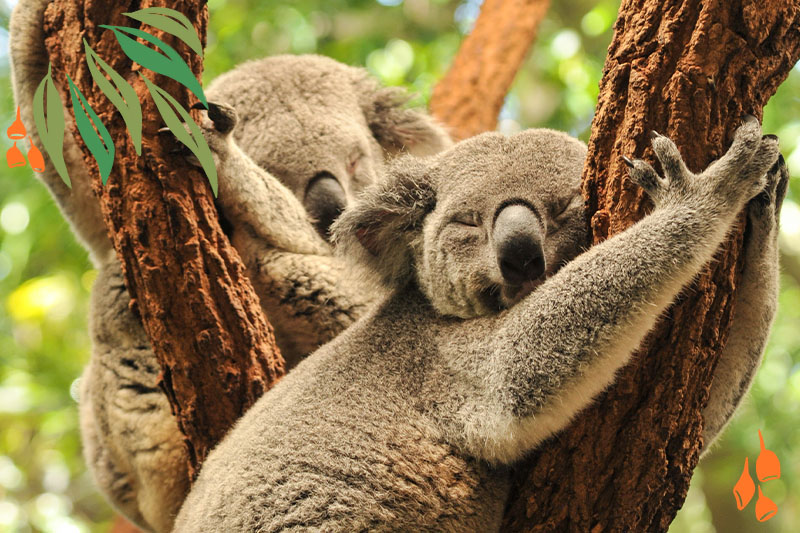
Koalas are often imagined as sleepy, solitary animals high in the gum trees, but research has revealed a much more socially complex side to these iconic marsupials.

In a 2006 study, scientists observed female koalas in captive populations, engaging in repeated same-sex sexual behaviour and vocal communication that closely mirrored heterosexual interactions. Some females actively rejected males before interacting with other females instead.

These interactions included mounting, courtship-like behaviours and distinctive mating vocalisations. The study challenged long-held assumptions that animal relationships exist only for reproduction, revealing that even koalas display a broader spectrum of social and sexual behaviours than many people expect from the natural world.

A landmark study titled Heterosexual and homosexual behaviour and vocalisations in captive female koalas (Phascolarctos cinereus) documented repeated same-sex sexual interactions between female koalas in captivity [1]. Researchers recorded 43 homosexual interactions compared to 15 heterosexual interactions, finding that female-female encounters contained the same core behavioural components observed during heterosexual mating, including neck biting, thrusting, pauses and post-copulatory behaviours [1]. The vocalisations accompanying these interactions were also remarkably similar.

Importantly, some female koalas rejected males before initiating interactions with other females, suggesting these behaviours were not simply accidental or random [1]. Researchers noted that female koalas produced characteristic oestrous calls, rejection calls and mating vocalisations during both heterosexual and homosexual encounters. The study concluded that homosexual and heterosexual interactions shared the same behavioural structure and communicative signals, differing mainly in duration and physical mechanics [1].

Scientists believe these behaviours may be linked to the social and hormonal dynamics of captive populations, particularly environments with female-skewed groups and increased social interaction [2]. However, the findings also contribute to a much broader body of evidence showing that same-sex sexual behaviour naturally occurs across hundreds of mammal species [3]. Modern behavioural science increasingly recognises that these interactions can serve multiple social purposes beyond reproduction, including tension reduction, social bonding, communication and behavioural expression.

Koalas are already unusual marsupials due to their complex vocal communication systems. While males are famous for their deep bellows, females also produce a wide range of vocalisations connected to mating, rejection and social interactions [4]. The discovery that female-female interactions involved many of these same calls further highlights the social complexity of koala behaviour.

Rather than fitting neatly into rigid behavioural categories, koalas demonstrate that social and sexual diversity exist even among some of Australia’s most recognisable native animals.

[1] Feige, S., Nilsson, K., Phillips, C. J. C. & Johnston, S. D. (2007). Heterosexual and homosexual behaviour and vocalisations in captive female koalas (Phascolarctos cinereus). Applied Animal Behaviour Science.
[2] Feige, S. et al. discussion summary via ResearchGate.
[3] Sommer, V. & Vasey, P. (2006). Homosexual Behaviour in Animals: An Evolutionary Perspective. Cambridge University Press.
[4] Smith, M. Behaviour of the Koala, Phascolarctos cinereus, in captivity III: Vocalisations. Australian Wildlife Research.


Tamarins (K5)

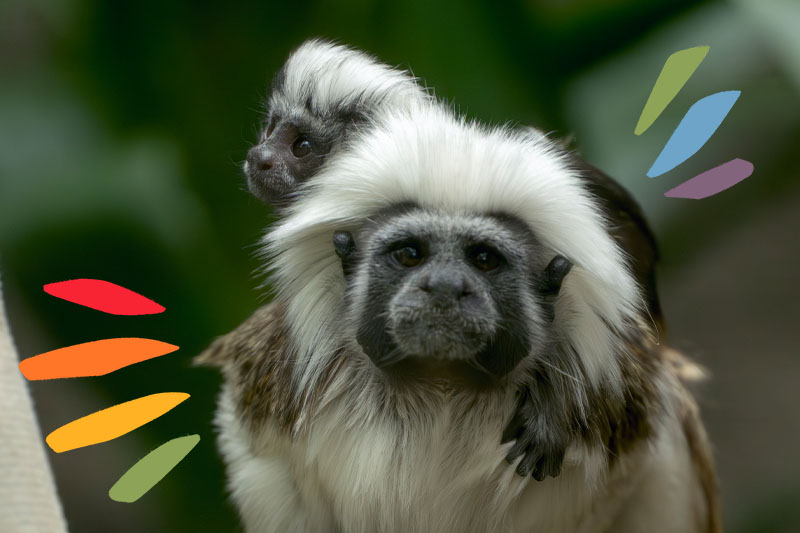
In tamarin society, it really does take a village to raise a child. These tiny rainforest primates live in close-knit family groups where parenting duties are shared across the entire troop.

Fathers carry babies on their backs, older siblings babysit, and non-breeding adults help feed, groom and protect the young. Some tamarin species even rely on this teamwork for infant survival. Their social lives are filled with constant communication, cuddling, grooming and relationship building. Scientists have also observed same-sex mounting and bonding behaviours within tamarin social groups, revealing a world where connection, caregiving and cooperation matter far more than rigid social roles or traditional family structures.

Tamarins are among the most socially cooperative primates in the animal kingdom. Species including Cotton-top Tamarins (Saguinus oedipus), Emperor Tamarins (Saguinus imperator) and Golden Lion Tamarins (Leontopithecus rosalia) live in highly interconnected social groups where raising offspring becomes a communal responsibility rather than the sole role of a breeding pair [1]. This system, known as cooperative breeding or alloparenting, sees fathers, siblings and other group members actively involved in carrying, grooming, protecting and feeding infants. Male tamarins are particularly hands-on parents, often carrying twins for most of the day and only passing them to the mother for feeding [2].

Researchers studying tamarin behaviour have also documented same-sex mounting, affiliative physical contact and strong same-sex social bonds, behaviours increasingly recognised as important parts of primate social structure rather than purely reproductive acts [3][4]. In tightly bonded social species, these interactions can help strengthen alliances, reduce conflict, reinforce trust and maintain overall group stability [4]. Modern primatology now understands that sexual and social behaviours in animals often exist along a spectrum of functions connected to communication, bonding and cooperation.

This flexibility is especially important because tamarin infants are unusually demanding to raise. Tamarins frequently give birth to twins whose combined weight can account for up to 20 percent of the mother’s body weight [1]. Without constant support from the wider troop, successful infant survival would be far less likely. Over time, this evolutionary pressure helped shape social systems built around collective caregiving rather than strict reproductive roles [5].

Tamarin societies offer a striking example of how nature embraces diversity in caregiving, bonding and social structure. Their world is not defined by rigid binaries, but by cooperation, community and shared responsibility.

[1] Goldizen, A. W. (1987). Tamarin and marmoset mating systems: unusual flexibility. Trends in Ecology & Evolution.
[2] Snowdon, C. T. (1996). Infant care in cooperatively breeding species. Advances in the Study of Behavior.
[3] Bagemihl, B. (1999). Biological Exuberance: Animal Homosexuality and Natural Diversity. St Martin’s Press.
[4] Vasey, P. L. (1995). Homosexual behaviour in primates: a review of evidence and theory. International Journal of Primatology.
[5] Digby, L. J., Ferrari, S. F. & Saltzman, W. (2007). Callitrichines: The Role of Competition in Cooperative Reproduction. Cambridge University Press.


Laysan Albatross (L8)

Australian Pelicans may be famous for their enormous bills and graceful gliding, but out across the Pacific Ocean, one of their distant seabird relatives has become one of the most fascinating examples of same-sex parenting in the animal kingdom: the Laysan Albatross.

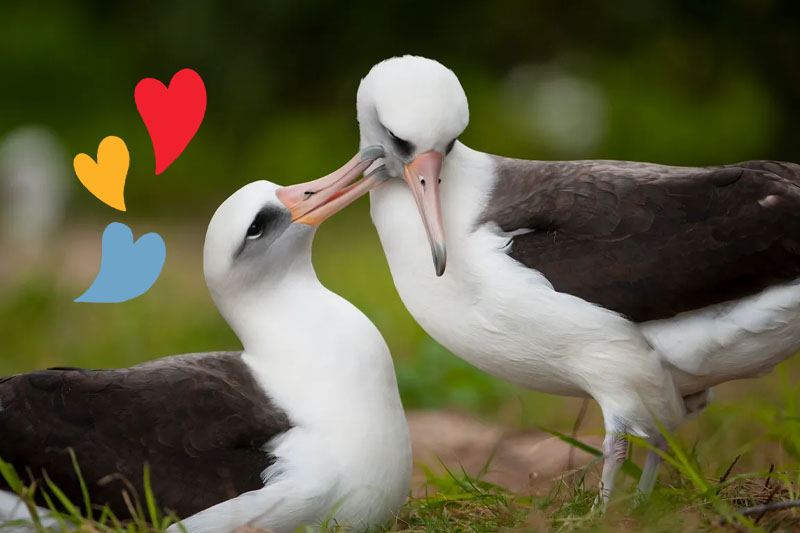
In some colonies, scientists discovered long-term female-female partnerships where two females formed strong pair bonds, returned to each other year after year, and raised chicks together, even when male partners were available. Because Laysan Albatrosses can only raise one chick at a time, successful parenting depends on extraordinary teamwork.

These devoted female pairs shared incubation, nest defence and feeding duties, revealing how cooperation and connection can shape family life in unexpected ways.

Laysan Albatrosses (Phoebastria immutabilis) became internationally significant in the study of animal social behaviour after researchers documented stable female-female pair bonds within breeding colonies in Hawaii [1]. In some populations, up to 31 percent of breeding pairs consisted of two females working cooperatively to incubate eggs and raise chicks together. These were not temporary arrangements. Many females repeatedly reunited with the same female partner across multiple breeding seasons, even when males remained present and available within the colony [1][2].

This behaviour is particularly significant because albatross reproduction involves extraordinary parental investment. Laysan Albatrosses lay only a single egg per breeding attempt, and both adults are required to successfully raise the chick [3]. Incubation can last for over two months, followed by many additional months of feeding and protection before the chick fledges. A lone parent would struggle to raise offspring successfully, making long-term cooperative partnerships essential for survival.

Researchers believe female-female pairings likely emerged partly due to skewed sex ratios in some colonies, where females outnumbered males [1]. Typically, one female would mate with a male outside the pair bond, after which both females shared incubation duties and chick rearing. Importantly, studies found these same-sex pairs could successfully fledge chicks over multiple years, demonstrating that cooperative parenting systems can function effectively outside traditional male-female structures [1][2].

Laysan Albatrosses continue to challenge older assumptions about relationships in nature. Their behaviour highlights that pair bonding in animals is not solely about reproduction, but also about long-term social compatibility, cooperation and shared parental investment. Among seabirds, where raising even a single chick requires immense teamwork, stable partnerships of many forms can become successful evolutionary strategies.

[1] Young, L. C., Zaun, B. J. & VanderWerf, E. A. (2008). Successful same-sex pairing in Laysan Albatross. Biology Letters.
[2] Bailey, N. W. & Zuk, M. (2009). Same-sex sexual behaviour and evolution. Trends in Ecology & Evolution.
[3] Tickell, W. L. N. (2000). Albatrosses. Yale University Press.


Bonobos (P8)

White-cheeked Gibbons are known for their powerful pair bonds, often singing elaborate duets with their partners high in the rainforest canopy.

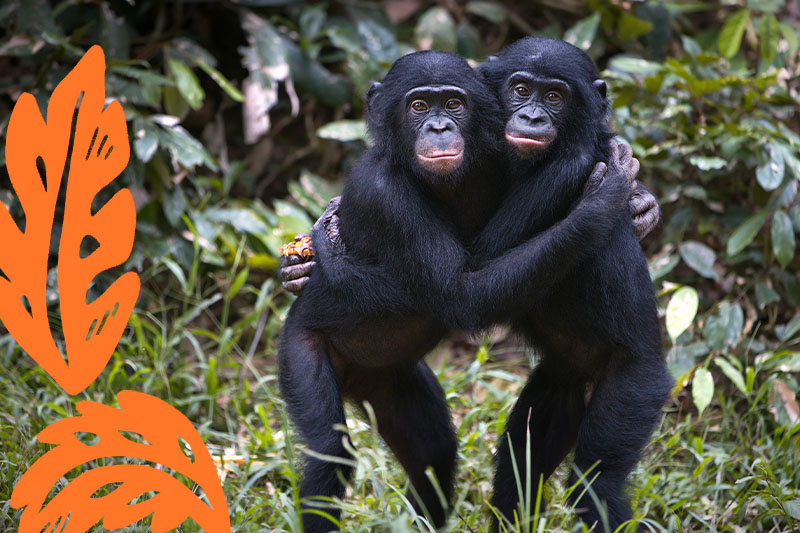
But elsewhere in the primate world, bonobos have taken social bonding in a completely different direction. Bonobos are famous for using affection, touch and sexual behaviour as part of everyday social life, not just reproduction.
Same-sex interactions between both males and females are common, helping strengthen friendships, ease tension and maintain group harmony.

In bonobo society, connection and cooperation sit at the centre of community life, making them one of the most socially and sexually diverse primates ever studied.

Bonobos (Pan paniscus), one of humanity’s closest living relatives alongside chimpanzees, have become one of the most scientifically significant examples of diverse sexual and social behaviour in animals. Unlike many primates where sexual behaviour is closely tied to reproduction, bonobos use sexual interactions as an important social tool woven throughout daily life [1][2]. Researchers have documented frequent same-sex sexual behaviour among both females and males, including genital rubbing, mounting and sociosexual bonding behaviours that occur outside reproductive contexts [2].

Female-female bonding is particularly important in bonobo society. Groups are largely female-led, with strong alliances between females helping maintain social stability and reducing aggression within the troop [3]. Sexual interactions between females, especially genito-genital rubbing behaviour often called “GG rubbing,” are understood to strengthen trust, reinforce alliances and ease social tension during feeding or group integration [2][3]. Male bonobos also engage in same-sex sexual behaviours that contribute to bonding and conflict resolution.

What makes bonobos especially remarkable is the role these behaviours play in maintaining peaceful societies. Compared to chimpanzees, bonobos show significantly lower levels of violent aggression and instead rely heavily on social bonding, cooperation and affiliative behaviour to resolve conflict [4]. Scientists increasingly recognise bonobo sexuality as deeply connected to communication, emotional regulation and community cohesion rather than reproduction alone.

This social flexibility challenges long-standing assumptions that animal sexual behaviour exists only for breeding. Bonobos demonstrate that intimacy, partnership and social connection can serve many evolutionary functions, including cooperation, trust building and maintaining stable communities. Their societies provide one of the clearest examples in the natural world of how diverse sexual and social behaviours can strengthen relationships and shape group dynamics.

[1] de Waal, F. (1995). Bonobo: The Forgotten Ape. University of California Press.
[2] Bagemihl, B. (1999). Biological Exuberance: Animal Homosexuality and Natural Diversity. St Martin’s Press.
[3] Hohmann, G. & Fruth, B. (2000). Use and function of genital contacts among female bonobos. Animal Behaviour.
[4] Parish, A. R. (1996). Female relationships in bonobos. Human Nature.


Fish (S11)

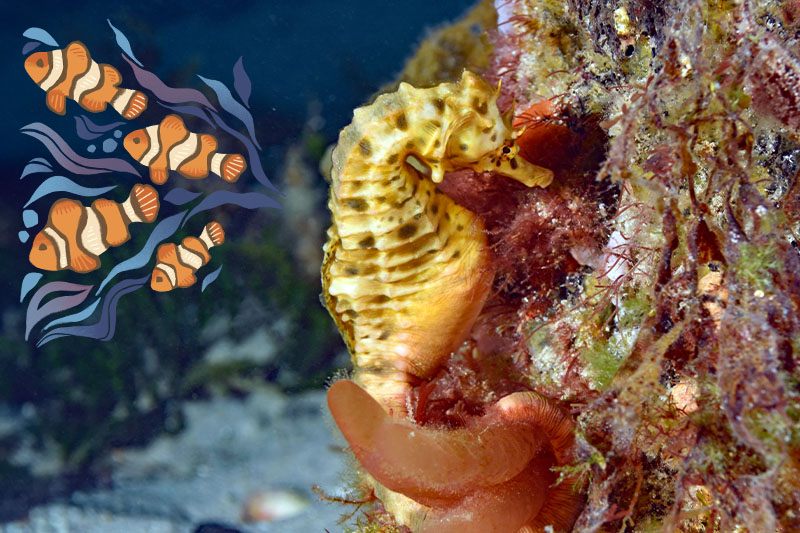
Inside the Envirodome, you’ll find a vibrant underwater world filled with species like Cardinal Tetra, Ember Tetra, Pygmy Corydoras, Southern Purple-spotted Gudgeon and Pot-bellied Seahorses.

But beyond their colours and movement lies something even more fascinating: fish are home to some of the most flexible and diverse reproductive systems in the animal kingdom.

Around the world, hundreds of fish species can naturally change sex during their lifetime. Some begin life male and later become female, while others do the reverse depending on age, size or social structure.

While seahorses don’t change sex, they offer another fascinating twist on reproduction as it’s the males that become pregnant and give birth. In the underwater world, gender and reproduction are often fluid, adaptable and far more complex than humans once imagined.

Fish display some of the greatest diversity in sex and reproduction anywhere in the animal kingdom.

Scientists estimate more than 500 fish species can naturally change sex during their lifetime, a phenomenon known as sequential hermaphroditism [1]. Among the most famous are clownfish, popularised through Finding Nemo. Clownfish live in social hierarchies led by a dominant breeding female. If she dies, the largest male undergoes hormonal, behavioural and physical changes to permanently become female [2].

Other species take different approaches. Parrotfish often begin life female before permanently transitioning to male as they mature, a process called protogynous hermaphroditism [1]. In contrast, the Chalk Bass displays remarkable flexibility, with individuals capable of changing sex back and forth depending on the social balance of their group [5]. These adaptations allow populations to respond dynamically to breeding needs, territory and survival.

Then there are the Pot-bellied Seahorses you can see here in the Envirodome. Seahorses don’t change sex, but they do challenge another assumption about reproduction: the males become pregnant. During mating, the female transfers her eggs into a specialised brood pouch on the male. The male fertilises and carries the developing embryos, providing protection, oxygen and nutrients before eventually giving birth to fully formed young [6][7].

Research into fish biology continues to challenge long-held assumptions that sex in nature is always fixed or strictly binary [3][4]. Instead, fish reveal a spectrum of reproductive strategies shaped by environment, hierarchy, age and social connection. Far from being unusual, diversity and fluidity are deeply woven into the natural world.

[1] Sadovy de Mitcheson, Y. & Liu, M. (2008). Functional hermaphroditism in teleosts. Fish and Fisheries.
[2] National Geographic. “Many Fish Change Sex. Here’s Why.”
[3] Devlin, R.H. & Nagahama, Y. (2002). Sex determination and sex differentiation in fish. Aquaculture.
[4] Smithsonian Ocean Portal. “Sex Change in Fish.”
[5] Kuwamura, T. et al. (2016). Bidirectional sex change in fishes. Biological Reviews.
[6] Australian Museum. The diverse, distinctive and charismatic seahorse genus Hippocampus.
[7] Animal Diversity Web. Hippocampus abdominalis (Large/Pot-bellied Seahorse).


Butterflies, birds and bugs (S10)

Nature does not always divide itself neatly into male or female. Occasionally, an animal emerges displaying characteristics of both sexes at the same time, split dramatically across a single body.

This rare phenomenon, known as bilateral gynandromorphism, has been recorded in butterflies, birds such as Zebra Finches, and even stick insects.

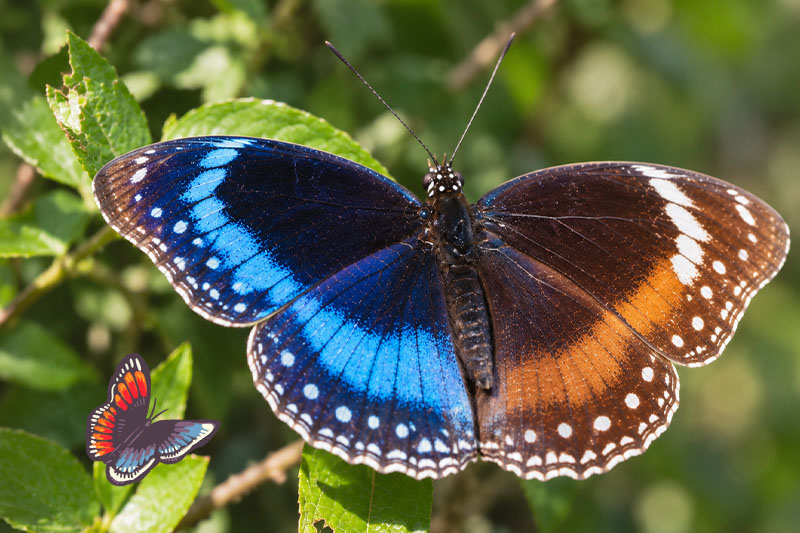
In Spring 2025, the Australian Butterfly Sanctuary revealed an extraordinary bilateral gynandromorph Blue Banded Eggfly butterfly, with one side displaying male wing patterns and the other female colouration. These rare animals provide a fascinating glimpse into the complexity of biological development and reveal that sex in nature is not always as simple or visually binary as humans often assume.

Gynandromorphism is a rare biological phenomenon in which an individual develops both male and female characteristics within the same body [1]. In bilateral gynandromorphs, this split can occur almost perfectly down the centre, producing animals where one half expresses male traits while the other expresses female traits. Scientists believe this occurs during the earliest stages of development, when sex chromosomes separate abnormally during cell division, creating genetically distinct male and female tissues within the same organism [1][2].

This phenomenon has been documented across several animal groups, particularly insects and birds. Butterflies often produce the most visually dramatic examples because males and females can display entirely different colours and wing patterns. The bilateral gynandromorph Blue Banded Eggfly observed at the Australian Butterfly Sanctuary in 2025 displayed distinct male and female wing characteristics on opposite sides of its body, making it an exceptionally rare example of the condition.

Gynandromorphism has also been recorded in Zebra Finches, Northern Cardinals and stick insects [3][4]. Like the Komodo dragon and Whiptail Lizard, some stick insect species already challenge conventional understandings of sex and reproduction through parthenogenesis, where females can reproduce without males, making discoveries of mixed-sex individuals particularly fascinating to evolutionary biologists [5]. In birds, cases of bilateral gynandromorphism became especially influential after researchers studied a Zebra Finch displaying male plumage and brain structures on one side and female characteristics on the other. Despite developing under the same hormonal conditions, the two halves of the bird developed differently, suggesting that bird cells possess their own intrinsic sex identity independent of hormones alone [3]

Together, these discoveries continue to challenge simplified assumptions around sex, reproduction and biological identity, demonstrating that variation and complexity are natural parts of life throughout the animal kingdom.

[1] Narita, S., Pereira, R. A. S. & Kjellberg, F. (2010). Gynandromorphs and intersexes: potential to understand the mechanism of sex determination in arthropods. Terrestrial Arthropod Reviews.
[2] Kark, S. (2001). Shifts in bilateral asymmetry and gynandromorphism in insects. Annual Review of Entomology.
[3] Agate, R. J., et al. (2003). Neural, not gonadal, origin of brain sex differences in a gynandromorphic finch. Proceedings of the National Academy of Sciences.
[4] Arnold, A. P. (2004). Sex chromosomes and brain gender. Nature Reviews Neuroscience.
[5] Bedford, G. O. (1978). Biology and ecology of the Phasmatodea. Annual Review of Entomology.


Superb Fairy Wren (M12)

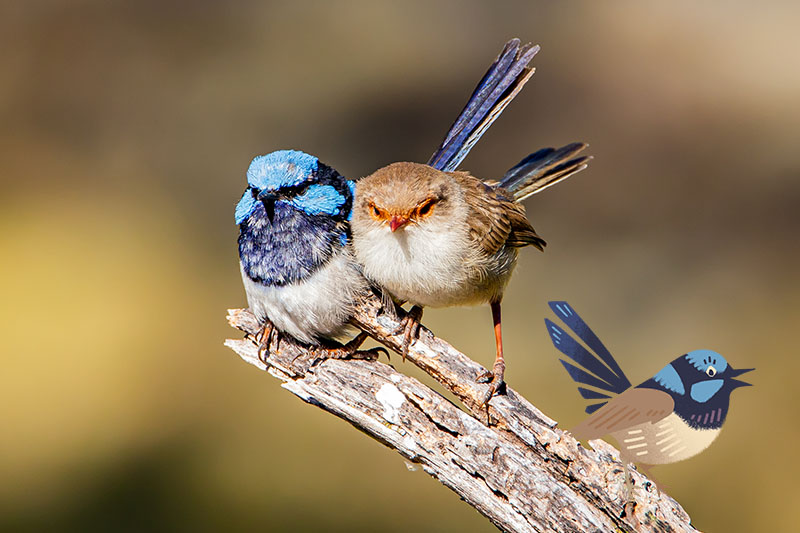
Superb Fairy-wrens might look like devoted couples, but behind the scenes it’s a different story. A male and female may pair up and raise a nest together, but at dawn, females often slip away to mate with other males, usually the more colourful or impressive singers of the neighbourhood. Meanwhile, her partner is back at home doing the same whenever he gets the chance.

The result is a single nest of chicks with multiple fathers. Both still raise the young. What may look messy through a human lens is, for fairy-wrens, a successful survival strategy. In their world, family is flexible, cooperative and built to help the next generation thrive.

Superb Fairy-wrens (Malurus cyaneus) provide a compelling example of how animal behaviour often resists simple, binary interpretations. While they are socially monogamous and form visible pair bonds between a male and female, genetic evidence shows that reproduction within these groups is far more complex. A significant proportion of offspring are the result of extra-pair mating, where females mate with multiple males. This leads to broods with mixed paternity, meaning care, reproduction and social bonding are not confined to a single pair. [1,2].

By mating with multiple partners, females can increase genetic diversity within their offspring, which may enhance survival. At the same time, multiple males may contribute to care or provide protection, even when paternity is uncertain. This creates a system where parenting roles are shared and not strictly tied to genetic ownership [3].

The species also challenges assumptions about how sex and identity are visually expressed. During the breeding season, dominant males display bright blue plumage, signalling reproductive status. However, many males, particularly younger or subordinate individuals, retain brown, female-like plumage. This overlap in appearance reduces conflict within the group and allows these males to remain socially integrated, sometimes gaining mating opportunities without attracting aggression. Rather than fixed visual markers, appearance becomes context-dependent and fluid [4].

Additionally, Superb Fairy-wrens live in cooperative social groups, where non-breeding individuals assist with raising young. These helpers, often male, invest in offspring that are not exclusively their own, highlighting that care and social contribution extend beyond direct reproduction [5].

Superb Fairy-wrens illustrate that in nature, relationships, roles and reproductive strategies exist on a spectrum. Their behaviour underscores a broader scientific reality: biological systems are diverse, adaptable and rarely confined to rigid categories.

[1] Mulder, RA, Dunn, PO, Cockburn, A, Lazenby-Cohen, KA & Howell, MJ 1994, ‘Helpers liberate female fairy-wrens from constraints on extra-pair mate choice’, Proceedings of the Royal Society B: Biological Sciences.

[2] Double, MC & Cockburn, A 2000, ‘Pre-dawn infidelity: females control extra-pair mating in Superb Fairy-wrens’, Proceedings of the Royal Society B: Biological Sciences.

[3] Cockburn, A 2006, ‘Prevalence of different modes of parental care in birds’, Proceedings of the Royal Society B: Biological Sciences.

[4] Peters, A, Astheimer, LB & Cockburn, A 2000, ‘Testosterone is involved in acquisition and maintenance of sexually selected male plumage in Superb Fairy-wrens, Malurus cyaneus’, Behavioral Ecology and Sociobiology.

[5] Rowley, I & Russell, E 1997, Fairy-wrens and Grasswrens: Maluridae, Oxford University Press.


Flamingos (O11)

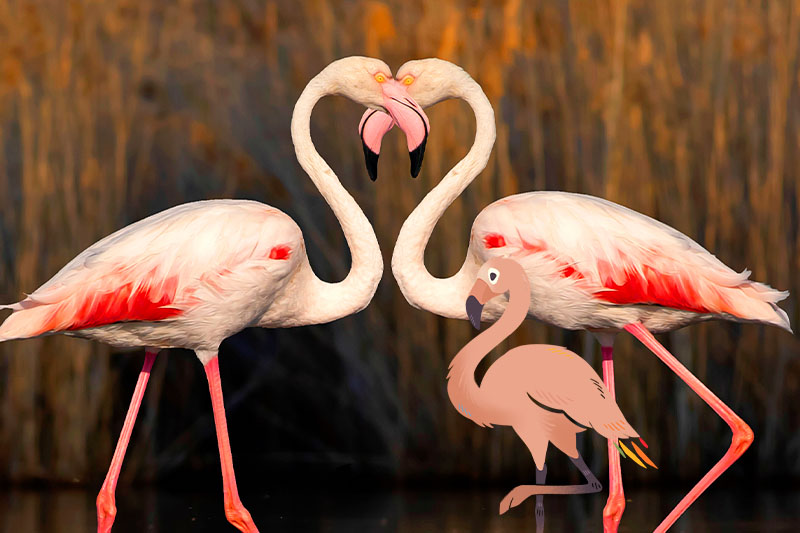
Few birds have become more closely linked with queer culture than the flamingo. Bold, expressive and impossible to ignore, flamingos have long been embraced as symbols of pride, flamboyance and individuality.

In Adelaide, the flamingos Greater and Chile from Adelaide Zoo became widely recognised within the local community, with the Feast Festival incorporating the pair into its festival branding for a period of time.

Their presence helped encourage conversations about diversity in the natural world and the many ways animals form social bonds and group structures. Today, the pair can still be seen taxidermied at the South Australian Museum, where visitors can also explore the museum’s queer trail, It’s In Our Nature.

Flamingos are among the most socially complex and visually expressive birds in the world. Species such as Greater Flamingos (Phoenicopterus roseus) and Chilean Flamingos (Phoenicopterus chilensis) live in enormous colonies where social interaction is central to survival and reproduction [1]. Their famous courtship rituals involve synchronised group displays including marching, wing salutes, head flagging and vocal communication, all designed to strengthen pair bonds and reinforce social cohesion within the colony [1][2].

Researchers have documented same-sex courtship, mounting and pair-bonding behaviours in flamingos and many other colonial bird species [3]. In highly social animals, these behaviours are increasingly understood as natural parts of broader social systems rather than behaviours tied strictly to reproduction. Social bonding in flamingos can help maintain stability within colonies, strengthen affiliative relationships and support cooperative group dynamics [2][3].

Flamingos have also become powerful cultural symbols within LGBTQIA+ communities. Their bright pink colouration, dramatic displays and unapologetically expressive behaviour helped cement the bird as a queer icon throughout the twentieth century, particularly in art, fashion and camp culture [4]. In Adelaide, this symbolism became locally significant through the much-loved flamingos Greater and Chile from Adelaide Zoo. Their popularity within the community eventually led to their inclusion within Feast Festival branding, connecting the birds directly to South Australia’s queer cultural history.

Both preserved flamingos remain on display at the South Australian Museum, continuing their connection to conversations around biodiversity, identity and the remarkable diversity found throughout the natural world.

[1] Johnson, A. R. & Cézilly, F. (2007). The Greater Flamingo. T & AD Poyser.
[2] Rose, P. E. & Croft, D. P. (2015). The potential of social network analysis for the management of zoo animals. Animal Welfare.
[3] Bagemihl, B. (1999). Biological Exuberance: Animal Homosexuality and Natural Diversity. St Martin’s Press.
[4] Newton, E. (1979). Mother Camp: Female Impersonators in America. University of Chicago Press.


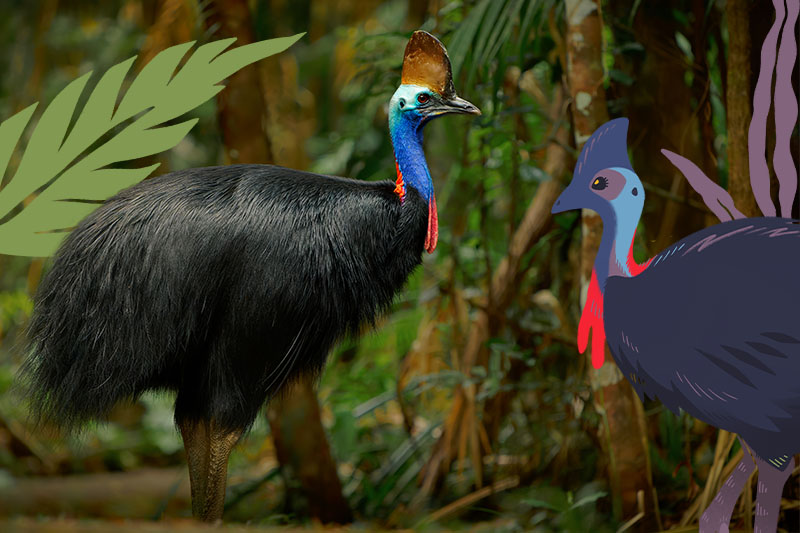
Southern Cassowary (O10)

Southern Cassowaries are often called one of the world’s most formidable birds, towering through the rainforests of northern Australia and New Guinea with dagger-like claws, booming calls and brilliant blue skin. But beyond their prehistoric appearance lies a species that has challenged human ideas about sex and gender for centuries.

In cassowary society, males take on nearly all parenting duties, incubating eggs and raising chicks alone for months. Even more unusual, both male and female cassowaries possess a phallic appendage, sometimes described as a pseudo-penis, that is not directly connected to reproduction.

In parts of New Guinea, cassowaries were traditionally viewed as powerful androgynous creatures embodying attributes of both sexes.

Southern Cassowaries (Casuarius casuarius) display one of the most unusual combinations of reproductive biology, parenting behaviour and cultural significance of any bird species. Biologically, cassowaries are notable because both males and females possess a phallic appendage or pseudo-penis, despite this structure not functioning as a reproductive organ in the way mammalian genitalia do [1]. This feature has fascinated zoologists for decades because external sex differentiation in cassowaries is already minimal, with females generally being larger and more dominant than males [2].

Cassowaries are also famous for their reversed parental roles. After laying eggs, females typically leave the nesting territory, while males incubate the clutch alone for approximately 50 days before raising the striped chicks independently for up to nine months [2][3]. This breeding system, known as sequential polyandry, allows females to mate with multiple males across a season while each male invests heavily in caring for offspring [3]. Scientists believe this strategy evolved because cassowary chicks require intensive protection and guidance to survive within dense rainforest environments.

Beyond biology, cassowaries hold deep cultural significance throughout New Guinea. In several Indigenous belief systems, cassowaries have traditionally been regarded as androgynous or mixed-gender creatures because they possess characteristics associated with both sexes [4]. Anthropologists studying highland communities documented beliefs that this blending of male and female traits made cassowaries spiritually powerful. Among the remote Bimin-Kuskusmin people of Central New Guinea, intersex individuals were historically viewed as representatives of cassowaries within ceremonial and ritual contexts, giving them elevated social and spiritual importance within the community [5].

Together, cassowary biology and cultural history challenge rigid assumptions about sex, gender and parental roles. From male-only parenting to ambiguous genital structures and longstanding cultural associations with gender diversity, Southern Cassowaries reveal that complexity and variation have always existed within both nature and human understandings of the natural world.

[1] Davies, S. J. J. F. (2002). Ratites and Tinamous. Oxford University Press.
[2] Mack, A. L. & Jones, J. (2003). The Ecology and Behaviour of Cassowaries. Journal of Avian Biology.
[3] Crome, F. H. J. & Moore, L. A. (1988). The cassowary’s casque. Australian Natural History.
[4] Herdt, G. H. (1981). Guardians of the Flutes: Idioms of Masculinity. University of Chicago Press.
[5] Poole, F. J. P. (1981). The Ritual Forging of Identity: Aspects of Person and Self in Bimin-Kuskusmin Male Rituals. Cambridge University Press.


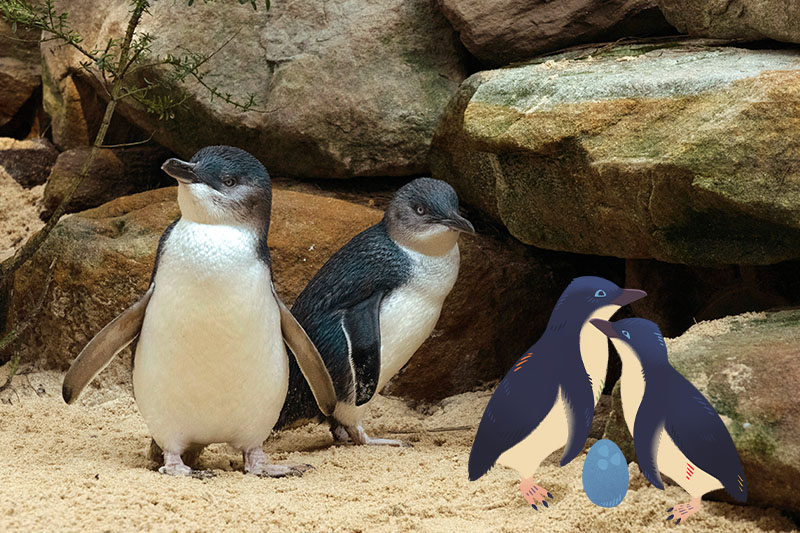
Little Penguin (G13)

Little Penguins are proof that love, partnership and family in nature don’t always follow a single script. Along the coastlines of Australia and New Zealand, these tiny seabirds form strong lifelong bonds built on trust, teamwork and plenty of noisy communication.

While many penguins pair male-to-female, same-sex penguin couples have also been observed building nests, incubating eggs and raising chicks together. Famous penguin pairs like Sphen and Magic at Sea Life Sydney Aquarium, and Roy and Silo at Central Park Zoo, won hearts around the world after successfully nurturing and raising chicks together.

Little Penguins (Eudyptula minor) are part of a growing body of scientific research showing that same-sex behaviour and diverse social bonding are naturally present throughout the animal kingdom. Across 10 penguin species, including Little Penguins, Humboldt Penguins, Gentoo Penguins and Chinstrap Penguins, researchers have documented same-sex courtship, pair bonding and cooperative parenting behaviours [1][2]. In zoo settings, highly bonded same-sex penguin pairs have sometimes been entrusted with abandoned or surplus eggs from other breeding pairs, successfully incubating and raising chicks as their own [3].

Among the most widely recognised examples are Sphen and Magic, two male Gentoo Penguins from Sea Life Sydney Aquarium, whose partnership gained international attention after they successfully raised foster chicks together [3]. Similarly, Roy and Silo, two male Chinstrap Penguins at Central Park Zoo, became internationally known after hatching and raising a chick named Tango [4]. Jones and Klaus, a same-sex male penguin pair at Melbourne Zoo, also became well known for their strong social bond and nesting behaviours [5]. These stories resonated globally because penguins display highly visible partnership behaviours, including courtship rituals, nest building and shared parenting responsibilities.

Penguins are intensely social seabirds that depend on long-term behavioural cooperation for breeding success. Little Penguins communicate through complex vocalisations, allowing mates and chicks to recognise one another among crowded colonies [6]. Strong coordination between partners is essential for nest defence, incubation and chick rearing, meaning compatibility and cooperation can be just as important as reproduction itself.

Penguin colonies demonstrate that nature does not operate within one rigid model of relationships or family structure. Instead, Little Penguins reveal a world where social diversity, cooperation and connection are deeply woven into survival.

[1] Russell, A. F., et al. (2012). Same-sex sexual behaviour and social bonding in birds. Trends in Ecology & Evolution.
[2] Bagemihl, B. (1999). Biological Exuberance: Animal Homosexuality and Natural Diversity. St Martin’s Press.
[3] Sea Life Sydney Aquarium. “Sphen and Magic Penguin Story.”
[4] Richardson, J. & Parnell, P. (2005). And Tango Makes Three. Simon & Schuster.
[5] Zoos Victoria. “Jones and Klaus Penguin Pairing.”
[6] Dann, P. (2004). Little Penguin: The Penguin Eudyptula minor. Oxford University Press.

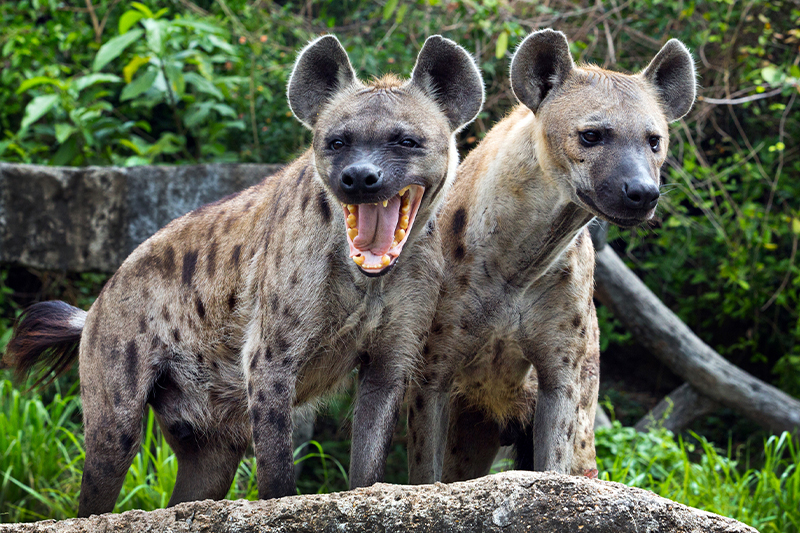
Spotted Hyena

Spotted Hyenas completely overturn many human assumptions about sex and gender in the animal kingdom. Female hyenas are larger, more dominant and more socially powerful than males, leading complex clans where they control access to food, territory and hierarchy.

Even more remarkably, females possess a pseudo-penis, which closely resembles male genitalia and is used for social signalling, dominance and even birth. For decades, this unusual anatomy confused scientists and challenged traditional ideas about how males and females are “supposed” to look or behave in nature. In hyena society, power, leadership and biology do not follow simple binary expectations.


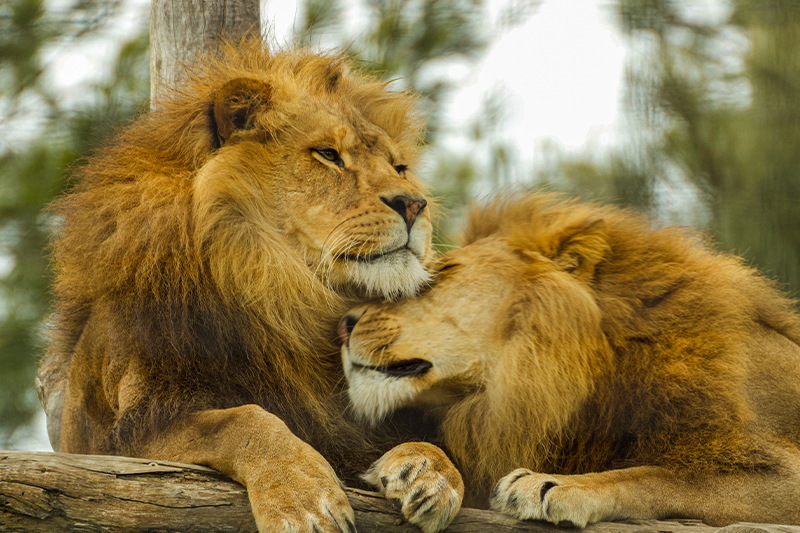
African Lions

African Lions are often portrayed as symbols of masculinity because of the male’s famous mane, but nature is not always so clear-cut. In rare cases, lionesses have developed darker, fuller mane growth similar to males, particularly in populations where hormonal differences increase testosterone levels.

Some maned lionesses have even displayed behaviours more commonly associated with male lions, including territorial defence and mounting. At the same time, lions are highly social animals, living within prides built on cooperation, hierarchy and strong female relationships. These rare maned lionesses remind scientists that sex characteristics in animals can sometimes exist outside expected norms, revealing the natural complexity of biology and development.


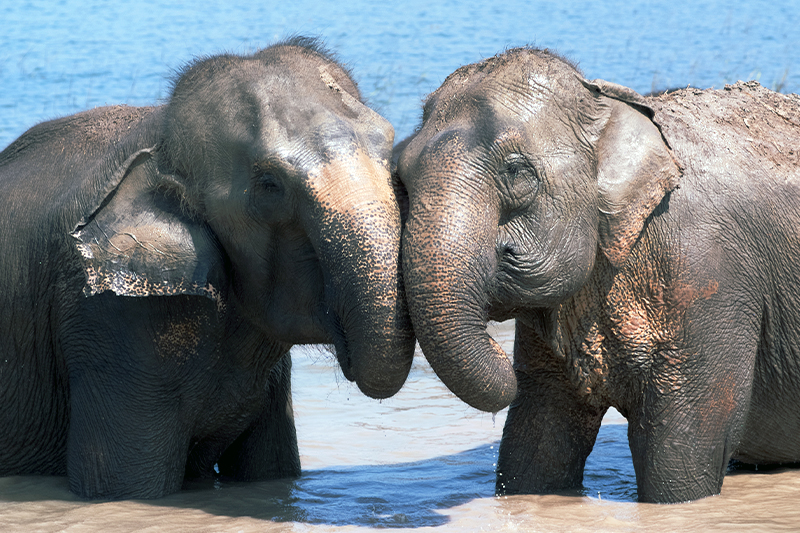
Asian Elephants

Asian Elephants form some of the strongest and most emotionally complex social bonds in the animal kingdom. While females live in close family herds led by experienced matriarchs, researchers have also documented same-sex social and sexual behaviours among elephants, particularly between males.

Young bulls often form deep long-term bonds with one another, engaging in trunk entwining, mounting and affectionate social behaviours that help establish trust and companionship. Elephants rely heavily on touch, communication and emotional connection throughout their lives, and scientists increasingly recognise that many of these interactions play important social roles beyond reproduction. Their societies highlight how connection and relationship-building can take many forms in nature.


Thank you

We hope this trail has given you a new perspective on the incredible diversity of the animal kingdom. There’s so much to celebrate in the many different ways life can exist, adapt and thrive.

As a conservation charity, we rely on the support of people like you. Every visit, membership and donation helps us connect people with nature and save species from extinction.

If you enjoyed the trail today, please consider making a donation and helping us continue this important work.

Thank you for exploring with us, for being curious, and for celebrating the wonderful diversity of our natural world.